World Bank: the Hormuz shock weighs on Gulf economies
The 6 October forecasts distinguish regional contraction from growth in oil-importing countries.
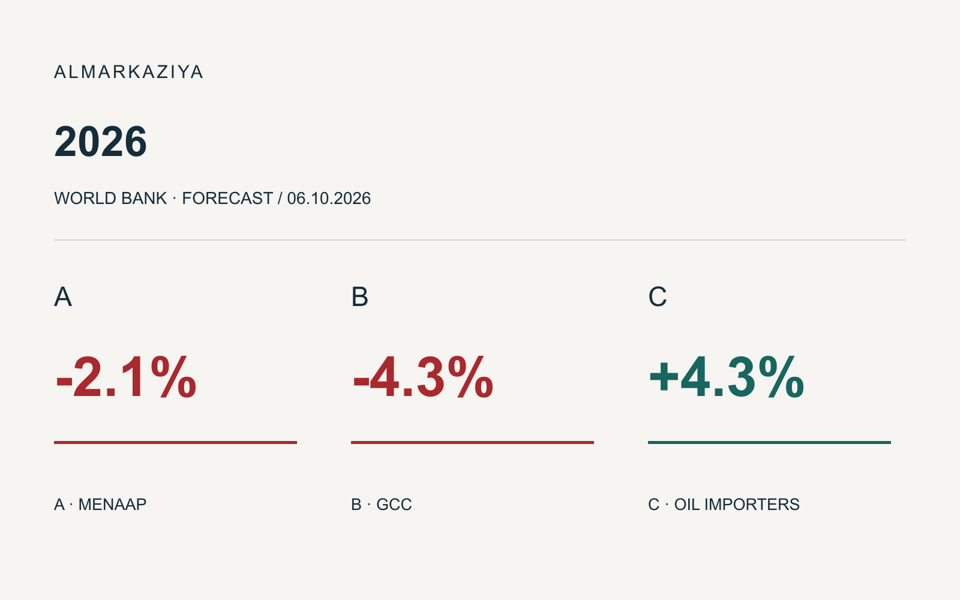
The World Bank projects an average contraction of 2.1% in 2026 across the Middle East, North Africa, Afghanistan and Pakistan, following growth of 3.3% in 2025. Its 6 October statement links the decline to the economic costs of the conflict that began in February and the closure of the Strait of Hormuz. These are forecasts, not final annual results.
Gulf Cooperation Council economies are projected to contract by an average of 4.3%. The institution says lower export volumes affect oil revenues and economic activity. Tourism, aviation and logistics also face disruption, while transport interruptions push up food import costs.
Oil-importing countries within the report’s coverage show a different pattern: projected growth reaches 4.3%, compared with 3.9% in 2025. This collective average is not a forecast specifically for Morocco. Regional figures therefore do not describe every country or sector in the same way.
For 2027, the World Bank envisages a rebound of 7.8% in the region excluding Iran, provided the conflict subsides by the end of 2026. This scenario depends particularly on a recovery in hydrocarbons. Infrastructure damage and postponed investment may constrain recovery: a conditional outlook is no guarantee.